

Stop the source
Close the nearest supply valve when it is safe to do so. Do not enter water near energized equipment.
Burnaby water-damage restoration & structural drying
Plan the right response to burst pipes, appliance leaks, storm intrusion, wet materials, mould concerns, and insurance-documentation needs.
Choose the loss signal
Choose the closest condition to read focused Burnaby guidance, then share only the details needed for an assessment.
Stop the source when safe, then record where water may have moved beneath cabinets, flooring, walls, and the room below.
Describe the source, possible contamination, contents, and wet materials before finishes hide the visible boundary.
Restrict access, avoid household fans, and seek qualified guidance before contaminated water or air reaches clean rooms.
Record affected units and contact the strata about access, common property, documentation, and shared assemblies.
Safety note Fire, structural danger, electrical exposure, or a life-threatening emergency requires 911—not an online assessment.
Do this first
If there is fire, structural danger, sewage exposure, or electrical risk, leave the area and contact emergency services. The request form is not emergency dispatch.
Close the nearest supply valve when it is safe to do so. Do not enter water near energized equipment.
Keep people and pets away from sewage, unknown water, unstable ceilings, and electrical exposure.
When it is safe, photograph the source, visible boundaries, and affected contents before moving materials.
Interactive incident brief
Choose what you know. The console turns three observations into safety reminders and a clearer restoration request.
Water-damage topics
Each page explains questions to raise about safety, affected materials, drying, documentation, and a property-specific scope.
Standing-water extraction planning after floods, burst pipes, appliance failures, or storm intrusion in Burnaby properties.
Moisture assessment, air movement, and dehumidification planning for wet framing, subfloors, and concealed cavities.
Moisture-source correction, professional assessment, containment, and cleanup planning when mould is present in Burnaby homes.
Photos, moisture records, work scopes, and communications that may support a water-damage insurance discussion.
Source assessment, contamination concerns, contents, extraction, and drying planning for flooded Burnaby basements and suites.
Safety and cleanup-scope guidance for sewage or drain backups where ordinary household cleanup may be unsafe in Burnaby properties.
Water-migration assessment and drying planning after supply-line, hot-water-tank, appliance, or plumbing failures.
Burnaby condo water-damage planning where access, common property, neighbouring units, and strata contacts affect next steps.
01 / STABILIZE
Consider safe source control, electrical and structural hazards, possible contamination, and unaffected areas before ordinary cleanup.
Evidence over assumption
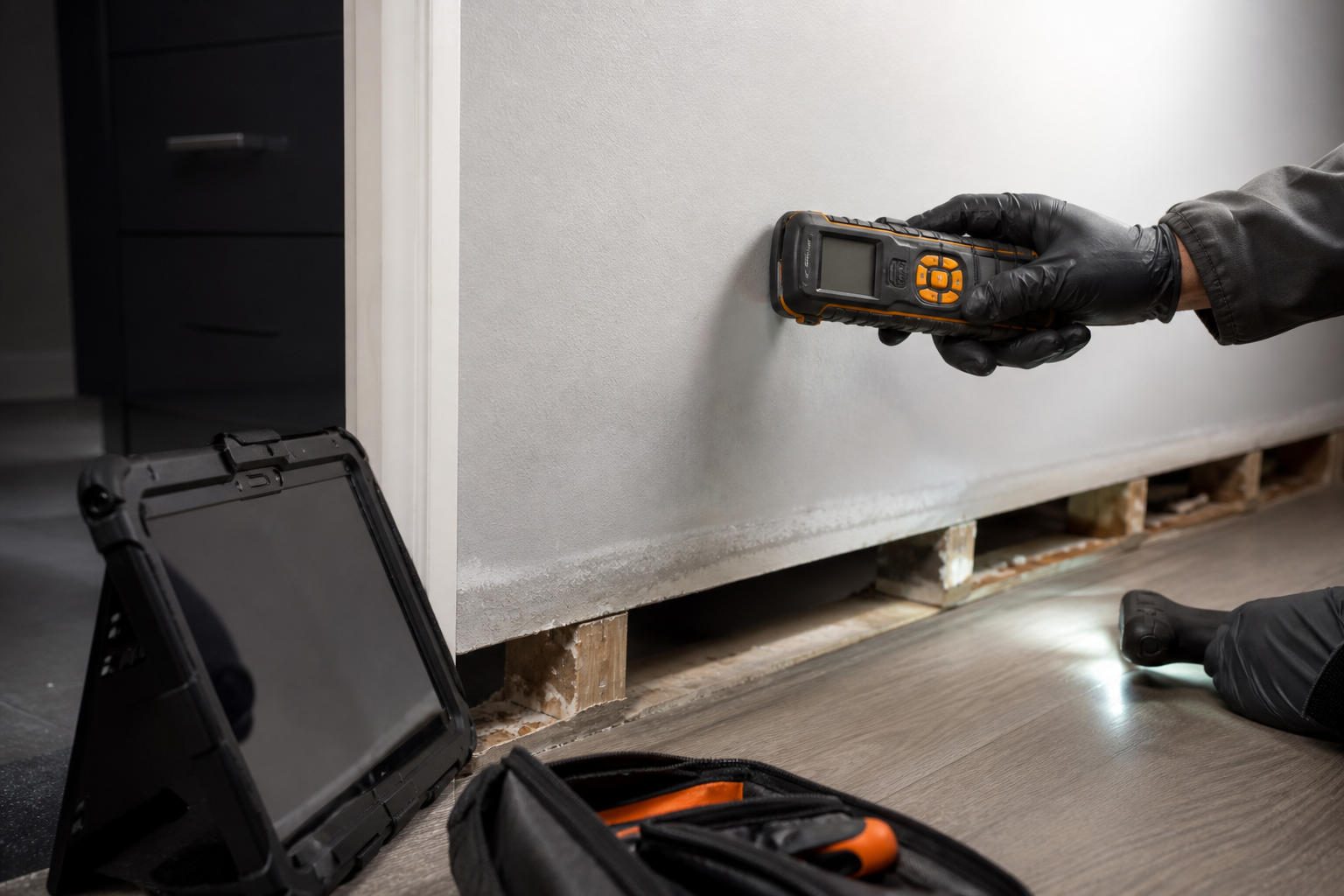
Moisture readings can connect affected materials, drying actions, and reported progress. They do not decide insurance coverage.
Why careful planning
A clear planning process helps property owners organize the next decision without guessing about response time, coverage, or demolition scope.
Active water, electrical exposure, contamination, and structural danger come before ordinary cleanup.
Affected materials, access, and repeatable readings should inform a drying scope—not a generic equipment count.
Ask any provider what is wet, what may need opening, and what still requires property-specific assessment.
Photos, readings, and work notes support claim conversations while insurers decide coverage.
Burnaby area information
The location list helps define the affected property and local context before assessment, access, and next-step planning begin.
Water damage questions
Clear answers for the first hours after water enters a Burnaby property.
Call 911 for fire, structural danger, electrical exposure, or a life-threatening emergency. A water-damage assessment request is not emergency dispatch.
If it is safe: stop the water source, keep people and pets out of contaminated areas, move undamaged items to dry rooms, and take photos. Avoid running household fans into sewage or unknown water. Do not enter areas with electrical hazards.
When it is safe, photograph the source and visible damage and contact the insurer before cleanup. Ask any provider for factual readings, work scopes, changes, and invoices. The insurer decides coverage.
Not always. The water source, contamination, material, saturation, and time wet all matter. A qualified professional should explain any removal recommendation for the actual property.
Requests focus on Burnaby properties, including Metrotown, Brentwood, Burnaby Heights, Edmonds, Capitol Hill, and South Slope. Include the full property address so the location is clear.
For urgent municipal water, sewer, or flooding issues, the City of Burnaby lists Engineering Emergency Dispatch at 604-294-7200. Call 911 for fire or life-threatening emergencies. The municipal line is separate from our water-damage contact line.
Request follow-up
Four fields are enough to begin: name, phone, property address, and optional incident details.
